Cross-Docking: How to Reduce Costs and Speed Up Delivery

As supply chains become more time-sensitive, businesses are looking for ways to move products faster — without increasing costs.
Traditional warehousing relies on storing inventory before it’s picked and shipped. But for many businesses, especially those dealing with high volumes or time-sensitive goods, this approach can create unnecessary delays and added expense.
Cross-docking offers a more efficient alternative — keeping goods moving instead of sitting in storage.
Cross-docking is a logistics strategy where incoming goods are transferred directly to outbound transport, with little to no storage time in between.
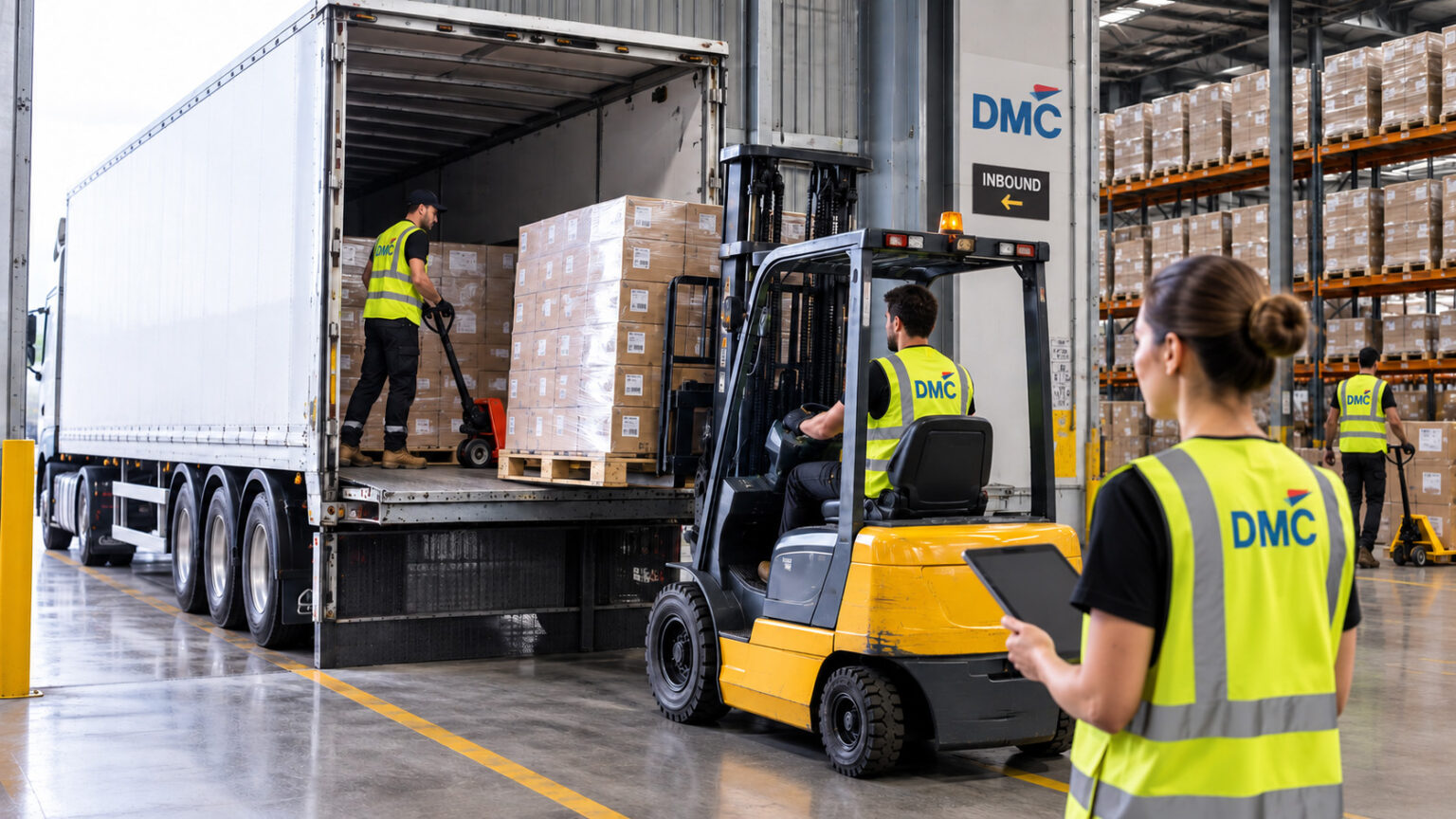
Instead of being stored in a warehouse, products are:
— often within the same day.
In many cases, goods move through the facility in under 24 hours.
The result is a faster, more streamlined supply chain that reduces handling and storage requirements.
Cross-docking relies on coordination and timing.
Goods arrive from suppliers and are immediately prepared for outbound delivery based on pre-planned orders or demand.
There are two main approaches:
Both approaches aim to minimise handling and eliminate unnecessary storage.
Cross-docking is designed to improve efficiency across the supply chain.
The key benefits include:
For high-volume or time-sensitive operations, these efficiencies can make a significant difference.
Traditional warehousing focuses on storing inventory until it is needed.
Cross-docking takes a different approach — it prioritises movement over storage.
Instead of holding stock for extended periods, cross-docking turns the warehouse into a transfer point rather than a storage facility.
This can significantly reduce costs and improve speed, but it also requires tighter coordination and more structured processes.
Cross-docking is not suitable for every operation, but it is highly effective in specific scenarios.
It is commonly used for:
In these environments, speed and efficiency are more valuable than long-term storage.
While cross-docking offers clear advantages, it also introduces new complexities.
Without the right structure, cross-docking can become difficult to manage.
Cross-docking only works when operations are tightly controlled.
At DMC, cross-docking is managed within a structured fulfilment environment, supported by:
Because cross-docking is part of a larger logistics capability, businesses can use it alongside warehousing, order fulfilment and distribution — depending on what their operation requires.
This ensures flexibility without losing control.
Cross-docking becomes valuable when:
At this point, reducing storage and increasing flow can improve both cost and performance.
Cross-docking isn’t about eliminating warehousing — it’s about using the right approach for the right situation.
With the right systems, processes and coordination in place, it becomes a powerful way to reduce costs, improve speed and streamline operations.
DMC helps businesses implement cross-docking as part of a broader fulfilment strategy — ensuring goods move efficiently without sacrificing accuracy or control.