Beyond Pick and Pack: Kitting, Bundling and Custom Ecommerce Fulfilment Explained

The simplest version of ecommerce fulfilment sounds straightforward. A customer orders a product. The warehouse picks it from a shelf, puts it in a box and sends it. But many ecommerce businesses require something more sophisticated. Products may need to be combined into bundles. Gift sets may need special presentation. Subscription boxes may change every month. Promotional packs may contain samples, cards or campaign collateral. Corporate or retail clients may need customised kits containing multiple components.
In these situations, fulfilment becomes more than pick and pack. It becomes part of the product itself.
Kitting means combining multiple individual items into a single defined unit.
For example, a skincare starter kit might contain:
Those components may exist as separate inventory items but are brought together into one sellable kit.
Kitting can happen:
In advance > A quantity is assembled and stored ready for orders.
On demand > Components are assembled only after the customer order arrives.
Both approaches have advantages. Pre-building can make fulfilment faster. On-demand assembly can reduce the risk of creating kits that do not sell.
Bundles are similar but do not always require physical pre-assembly.
An ecommerce website might offer > Buy shampoo + conditioner together and save 10%.
Online, the customer sees one offer. In the warehouse, the order may still require two individual SKUs to be picked. That creates an important systems question. The ecommerce platform and warehouse need to understand how the bundle relates to its individual components. If one item runs out, the bundle may no longer be available even though the website still technically shows the bundle SKU. Inventory logic matters.
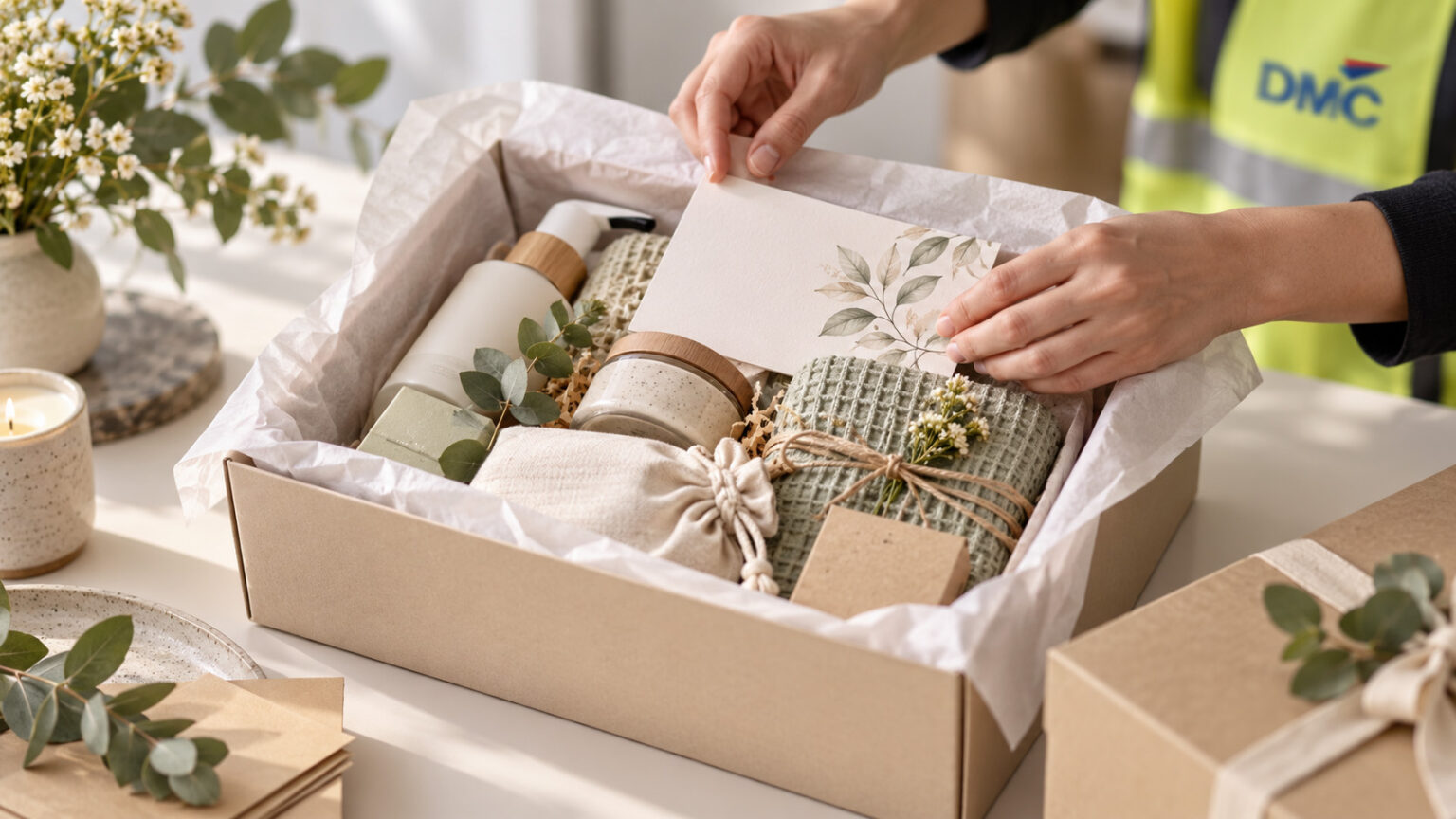
Gift fulfilment introduces another layer. Customers are not simply buying several products together. They are buying an experience.
That may include:
Presentation needs to be repeatable. The hundredth gift set should look as carefully assembled as the first.
That requires clear instructions, appropriate quality control and a packing environment designed for consistency.
Subscription businesses have a different challenge. The fulfilment process may repeat every month, but the contents can change. One month could include four SKUs. The next month might include six. Some subscribers may receive different variants.
There may be:
The workflow needs to be planned before each cycle. Otherwise subscription fulfilment can become extremely labour-intensive.
Campaigns can create temporary custom fulfilment requirements.
Examples include:
These jobs often have relatively short production windows and high presentation requirements. They may also involve variable contents. One recipient could receive three products. Another receives five. A third may receive a personalised note. The more variable the campaign, the more important data and quality control become.
A common blind spot is forgetting that custom packaging also needs to be managed.
A premium gift box may be just as important operationally as the product inside it.
Businesses may need to track:
If one packaging component runs out, the entire kit may become impossible to complete. Packaging therefore needs appropriate forecasting and replenishment just like product inventory.
There is no universal answer.
Businesses should consider the cost of assembly against the risk of locking stock into a configuration that may not sell.
This is one of the most important bundle-management questions. Imagine a kit contains four products. Three are in plentiful supply. One is out of stock. The complete kit can no longer be fulfilled.
Businesses need rules around:
This is where integration between ecommerce systems, inventory and warehouse operations becomes particularly important.
Sometimes pre-built kits do not sell as expected. Those components may need to return to individual inventory. That sounds simple. Operationally, it requires:
The cost of dismantling should therefore be considered when deciding how aggressively to pre-build.
The more complex the pack, the more important standardisation becomes.
Useful documentation may define:
Photographic packing guides can be particularly useful for premium or complex kits. The objective is to remove ambiguity. A warehouse operator should not have to guess how the finished pack is meant to look.
For ecommerce businesses, the parcel is often the first physical interaction between customer and brand. Until that moment, the entire relationship may have happened through:
Then a physical package arrives. That makes fulfilment an important brand touchpoint. The way products are presented, protected and assembled can influence how the customer perceives the entire purchase. A simple product may only need clean, reliable delivery. A premium or gift-oriented product may benefit from much more. The right fulfilment approach depends on what the brand is trying to achieve.
Customers do not need to know that their order required:
They simply need the right product to arrive, presented as intended. That is ultimately the purpose of good custom fulfilment. The complexity stays behind the scenes. The experience stays simple.
Need help with bundles, gift sets, subscription boxes or custom packing? DMC can manage complex ecommerce fulfilment with controlled processes and consistent presentation.
Discuss your custom fulfilment requirements