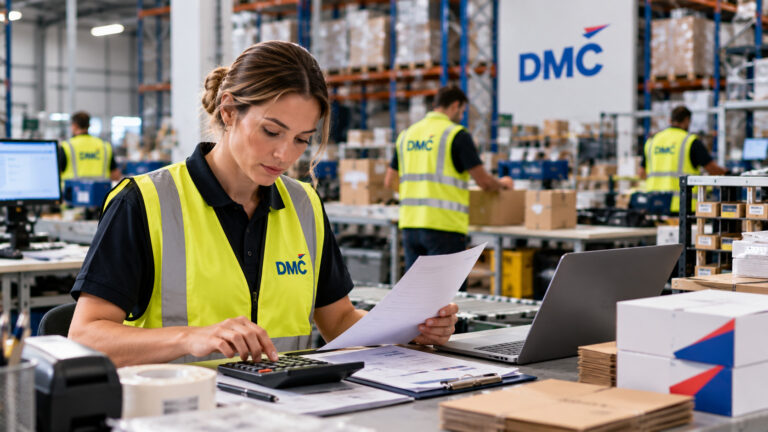
When Your 3PL Is No Longer Keeping Up With Your Business


Appointing a 3PL can solve a lot of operational problems, but it is not a decision you make once and then never revisit.
Businesses change over time. Order volumes increase, product ranges expand, new sales channels are added and customer expectations evolve. The systems and processes that worked well a few years ago may no longer be enough for the business you are running today.
That does not necessarily mean your 3PL has become a bad provider. Sometimes the business has simply outgrown the relationship.
The challenge is recognising that early enough to do something about it, rather than waiting until fulfilment becomes a genuine constraint.
Start with whether you still trust the inventory
One of the clearest signs that a fulfilment relationship needs attention is when internal teams stop trusting the stock position.
If ecommerce staff are constantly checking whether products shown as available are actually there, purchasing teams are second-guessing stock reports, or customer service is dealing with orders for products the business thought were in stock, the issue quickly spreads beyond the warehouse.
Inventory accuracy underpins a lot of other decisions. Marketing teams need it before they run a promotion. Purchasing teams rely on it when deciding what to reorder. Customer service needs it when answering questions.
Once that confidence starts to disappear, every part of the business becomes more cautious and more manual.
A reliable 3PL should make inventory easier to understand, not something your team needs to keep checking independently.
Growth should not make fulfilment less predictable
As a business grows, fulfilment naturally becomes more demanding. More orders, more SKUs and more promotions all place greater pressure on the operation.
A good 3PL should be able to plan for reasonable increases in volume, particularly when the business is communicating forecasts and upcoming campaigns in advance.
That does not mean a provider should have unlimited capacity sitting idle just in case. It does mean performance should remain broadly predictable as the business expands.
If dispatch is becoming slower during ordinary trading periods, or every major promotion creates a backlog, it may be a sign that the operation is running too close to its limits.
That matters because peak periods are often when the business has the most to gain. A successful marketing campaign should create more sales, not trigger a fulfilment crisis behind the scenes.
Outsourcing should remove work, not quietly return it to your team
One of the main reasons businesses move to a 3PL is to free internal teams from day-to-day logistics.
There will always be some collaboration. A good relationship still requires communication around incoming stock, promotions, order volumes and any changes to the way products are handled.
What should not become normal is spending large amounts of time chasing the warehouse, correcting stock discrepancies, following up missing reports or repeatedly solving dispatch issues.
If your team is effectively managing the 3PL’s operation for them, the value of outsourcing starts to erode.
The real cost is not only the 3PL invoice. It is also the time your people are spending on work they expected to hand over.
Reporting should become more useful as the business becomes more complex
A basic weekly spreadsheet may have been perfectly adequate when the operation was smaller.
As the business grows, that can change quickly.
You may need better visibility over live inventory, order status, returns, exceptions and stock movement. Finance may need different reporting. Customer service may need more current order information. Ecommerce teams may need more confidence in what is genuinely available to sell.
If the 3PL cannot provide that level of visibility, the limitation can start affecting decisions outside fulfilment itself.
This is one of the most common ways a 3PL relationship gets outgrown. The provider may still be processing orders, but the information around those orders is no longer enough for the rest of the business.
New requirements can expose whether the relationship still fits
Many ecommerce businesses begin with relatively simple direct-to-consumer fulfilment.
Over time, the model often becomes more complicated.
You may introduce bundles, custom packaging, wholesale distribution, B2B orders, subscription products or new sales channels. The warehouse may also need to handle launches, promotions or more sophisticated returns.
A capable 3PL should be able to absorb reasonable increases in complexity without every change becoming a major workaround.
If new requirements are constantly met with manual processes, extra administration or an outright “we can’t do that”, it is worth asking whether the provider still fits the direction of the business.
The question is not only whether they can fulfil today’s orders. It is whether they can support the operation you are building next.
Cost only makes sense when you look at the service around it
Logistics costs change. Labour becomes more expensive, property costs move and freight pricing changes over time.
That means a price increase on its own is not necessarily a reason to move.
The more useful question is whether the service and value still make sense at that price.
If costs are increasing while dispatch performance declines, visibility remains poor and the same errors keep recurring, then the relationship deserves closer scrutiny.
Equally, moving purely to find the cheapest provider can create a different problem. A lower rate is not necessarily better value if it comes with more manual work, weaker systems or poorer service.
The commercial decision needs to be made in context.
The real test is whether problems lead to improvement
Every fulfilment operation experiences issues occasionally. That is normal.
What matters is what happens afterwards. A strong provider should investigate the problem, understand why it happened and, where appropriate, change the process so it is less likely to happen again.
If the same failure appears month after month without meaningful improvement, the issue is no longer the individual mistake.
It is the fact that the operation is not learning from it.
That is often one of the strongest signs that a relationship has stopped progressing.
Review the relationship before you are forced to
Businesses often stay with an underperforming provider because switching feels difficult.
That is understandable. Moving stock, systems and order flows takes planning.
But waiting until a major service failure forces an urgent move usually makes the eventual transition harder.
A periodic review is a much healthier approach.
Ask whether the provider still supports the business you have today, whether they can support the business you are building next, and whether the relationship is giving your team enough confidence to keep growing.
The goal is not to change 3PLs unnecessarily.
It is to make sure fulfilment continues to support the business rather than quietly becoming one of the things holding it back.
If your current fulfilment arrangement is no longer keeping up, talk to DMC about what a more accountable, scalable 3PL model could look like for your business.