Brick and Mortar Fulfilment: How to Get Retail Distribution Right


Retail fulfilment is one of the most demanding parts of running a growing business.
Supplying into stores — whether your own locations or national retail networks — requires a level of precision that goes well beyond standard order fulfilment. Packaging must be correct, labelling must meet strict requirements, and deliveries need to arrive exactly when and how they’re expected.
When these processes aren’t handled properly, the impact is immediate: rejected shipments, delays, and unnecessary cost. As a result, many businesses reach a point where retail fulfilment can no longer be managed effectively in-house.
Brick and mortar fulfilment refers to the process of preparing and delivering goods into physical retail environments.
This includes everything from store replenishment and wholesale distribution through to managing retailer-specific compliance requirements. Unlike eCommerce fulfilment, where the process is relatively standardised, retail fulfilment is often dictated by the rules of each individual retailer.
That means the margin for error is much smaller — and the consequences of getting it wrong are much higher.
As businesses expand into retail, fulfilment quickly becomes more operationally demanding.
Each retailer may have its own requirements around packaging, labelling, pallet configuration and delivery windows. Orders are often larger, more time-sensitive, and less flexible than direct-to-consumer shipments.
Without structured processes in place, even small inconsistencies can lead to delays or rejected deliveries. Over time, this creates friction not just internally, but also in relationships with retail partners.
Managing this level of complexity requires more than just warehouse space — it requires experience and control.
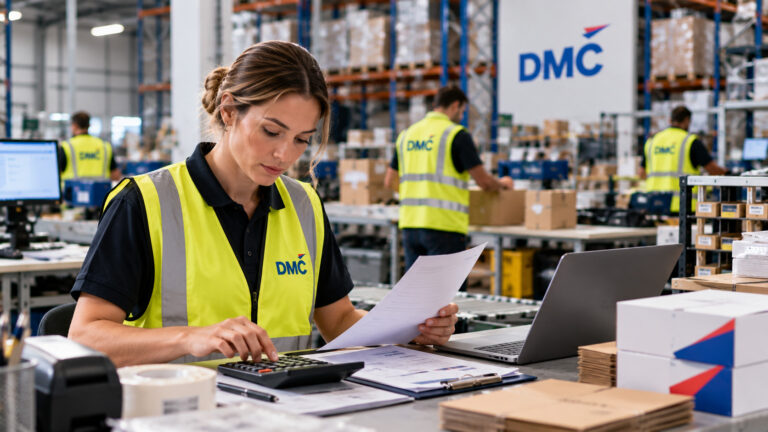
At DMC, retail fulfilment is handled through structured, repeatable processes designed to meet strict compliance requirements. Orders are prepared carefully, checked at key stages, and packed to align with retailer expectations.
Because operations are managed within a controlled environment by experienced teams, businesses gain confidence that their goods will be delivered correctly — not just most of the time, but consistently.
This is particularly important for businesses scaling into new retail channels, where reliability directly impacts growth opportunities.
Many businesses reach a tipping point where retail fulfilment becomes too complex to manage internally.
This often happens when:
At this stage, fulfilment is no longer just an operational function — it becomes a risk to the business if not handled properly.
A More Reliable Way to Manage Retail Fulfilment
Retail distribution doesn’t need to be a source of friction.
With the right processes and the right partner in place, it becomes a controlled, predictable part of your operation — one that supports growth rather than holding it back.
DMC works with businesses to ensure retail fulfilment is handled accurately, consistently and in line with retailer expectations, so you can scale with confidence.